<?xml version="1.0" encoding="UTF-8"?>
<feed xmlns="http://www.w3.org/2005/Atom">
  <title type="text">Cleveland Historical</title>
  <updated>2026-08-22T05:03:17+00:00</updated>
  <generator uri="http://framework.zend.com" version="1.12.20">Zend_Feed_Writer</generator>
  <link rel="alternate" type="text/html" href="https://temp.clevelandhistorical.clevelandhistorical.reclaim.hosting/"/>
  <link rel="self" type="application/atom+xml" href="https://temp.clevelandhistorical.clevelandhistorical.reclaim.hosting/items/browse?output=rss2"/>
  <id>https://temp.clevelandhistorical.clevelandhistorical.reclaim.hosting/</id>
  <author>
    <name>Cleveland Historical</name>
    <uri>https://temp.clevelandhistorical.clevelandhistorical.reclaim.hosting</uri>
  </author>
  <link rel="hub" href="http://pubsubhubbub.appspot.com/"/>
  <entry>
    <title type="html"><![CDATA[Van Horn and Clarke Fields: Pre-Merger Football at Case Western Reserve University]]></title>
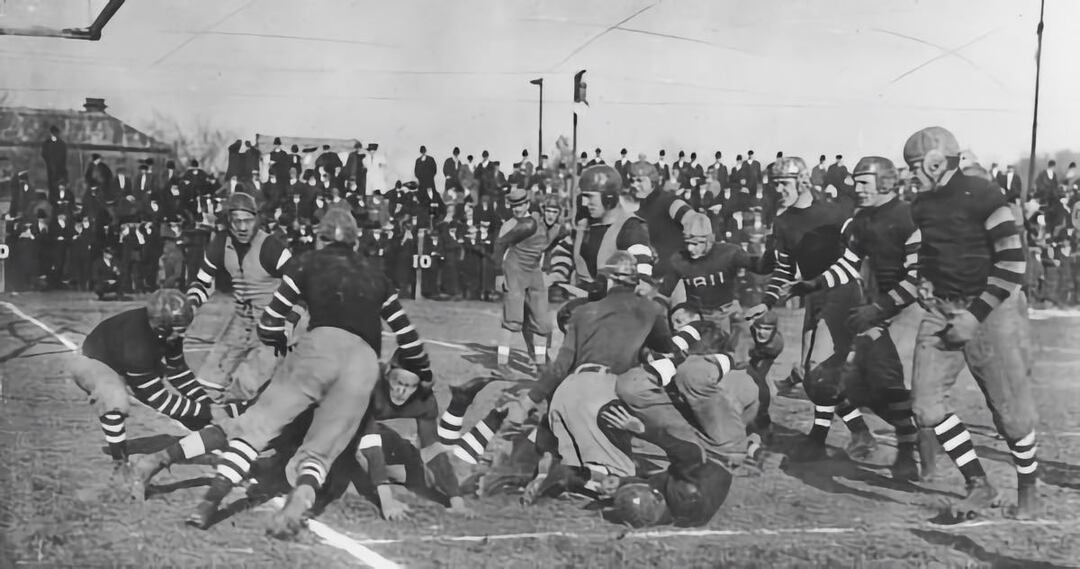
    <summary type="html"><![CDATA[<p><strong><em>Case School of Applied Sciences and Western Reserve University grew up as next-door neighbors and friends — until it was time to compete on the athletic field. Seventy-five years of competition ended as the Case Rough Riders and Western Reserve Red Cats  joined forces as the CWRU Spartans.</em></strong></p><img src="https://temp.clevelandhistorical.clevelandhistorical.reclaim.hosting/files/fullsize/9cd012990a06ef39581119ed226c2c2b.jpg" alt="Football Players on Van Horn Field" /><br/><p>The blending of Case School of Applied Sciences and Western Reserve University (Adelbert College) began in 1882 as the schools relocated from downtown Cleveland and Hudson, respectively, to adjoining land plots in University Circle. Amasa Stone donated money to acquire land for Adelbert College, and other donors stepped up to contribute funds to acquire adjoining property for Case. The concept of cooperation and collaboration of the two schools appealed to the donors and trustees of both institutions. The northwest-southeast campus spaces were bounded by Euclid Avenue, a railroad line, Adelbert Road, and Doan Brook. Adelbert College faced Case School of Applied Sciences with a shared “front yard” delineated by a sidewalk and, at times, a fence. The faculties and school administrations began a friendly relationship to complement each school’s programs which also manifested the sharing of space and facilities over time as needed. Despite the boundary, students and faculty shared experiences on campus at both institutions. </p><p>So, the story begins with buildings as Case began developing the southwestern ’stripe’ of campus land with one building in 1886 while Adelbert built five buildings on the northeastern ‘stripe’. By 1900, the Case campus occupied six buildings and WRU had nineteen. A center sidewalk marked the schools’ property line. Both schools dedicated space on the south side of campus to athletic fields which mirrored each other. Athletics in colleges in the later 1800s were typified by “pickup” games among students and faculty (intramural games) or “club” games with neighborhood teams involving track and field sports, baseball and, the newcomer, football. Two of Adelbert’s opponents in 1890 were Cleveland high school teams. By 1900, football had grown in national popularity among high school and college sports to the top of the scholastic sporting list. Case and Western Reserve were growing as well. Interscholastic competition was becoming popular and both schools sought to enter the competition. It is noteworthy that collegiate athletics and competition were generally governed not by the schools’ administrations, but by organizations of students, faculty, and patrons (boosters) to support sports programs.</p><p>Frank R. Van Horn was hired to the Case faculty in 1897 as a professor of assaying (geology) but was also assigned extra-curricular duties with the Case Athletic Association, the campus sports organization. Dr. Van Horn took a keen interest in the growing interscholastic scene and its demands upon the community to support the teams with both spirit and financial resources. He began a campaign to raise funds via ticket sales by fencing the field and building grandstands to accommodate spectators at the events in 1903. His planning succeeded with Case ‘Rough Rider’ football thriving for 36 seasons playing 167 home games on Van Horn Field and occasionally hosting 34 Reserve home games as well through 1939. Case, like Reserve, played area teams; the two schools hosted games in Cleveland nearly every week to the pleasure of local fans. Van Horn Field was the campus home field during these four decades, but many of both schools’ games were played at local venues — <a href="https://clevelandhistorical.org/items/show/16" title="League Park">League Park</a>, Shaw High Stadium, and Cleveland<a href="https://clevelandhistorical.org/items/show/149" title="Cleveland Municipal Stadium"> Municipal Stadium</a> — to accommodate larger crowds.</p><p>At Reserve, the blend of alumni and students to organize and ‘administer’ intercollegiate sports began during the 1890s and remained in force until 1919 when an unscrupulous alumnus absconded with the athletic treasury. The school ‘enrolled’ the sports program administration into the physical education department. Reserve ‘Red Cat’ football adopted and maintained a seven- to nine-game schedule in each season between 1891 and 1903 with opponents from around Ohio, Pennsylvania, and New York. Reserve home games were played on Justice John H. Clarke Field on campus as well as other local venues. The development of Van Horn Field provided shared facilities for Reserve as well. Improvements and additions to Clarke Field at mid-century made it the primary home site for WRU with 70 games and Case with 43 games between 1952 and 1966. Each season ended with Case as the opponent on a campus field or at the local League Park.</p><p>Both Case and Reserve scheduled annual opponents that also included Ohio State, Penn State, Cornell, Syracuse, Michigan, Notre Dame, Navy, and once with Alabama along with smaller neighboring college and university teams from the multi-state region during the first four decades decades of the 20th century. The allure of college football grew throughout the first half of the century and both schools maintained healthy fan bases and local attendance on fall Saturdays. Attendance at Saturday football began to diminish in the early 1950s signaling declining interest among students and fans. </p><p>By the end of the 1953 season, Case President T. Keith Glennan assembled a committee to review the athletic program. In December, he announced that football would be dropped from the athletic program. Reactions were strong on both sides of the issue; the loss of tradition and a popular sport versus the increasingly competitive and costly circumstances of intercollegiate football. A “funeral” was held on campus complete with a coffin, deflated football, and one-ton gravestone. Meanwhile, Glennan instructed the Case committee to draft a proposal to assemble a league of schools using Ivy League guidelines for athletics: no athletic scholarships and an emphasis on academics as the primary focus for all students. </p><p>Football continued unabated in 1954. Two years later, both schools became members of the newly formed Presidents Athletic Conference (PAC), which fielded between four and eleven teams over the years. The newly renovated Clarke Field was home to both schools through 1966 while space on campus north of Euclid Avenue was developed for Ed Finnigan athletic fields. Case and Western Reserve cooperated in several ways for the 70+ years they shared space in and around University Circle. On July 1, 1966, the schools announced a federation agreement to become Case Western Reserve University under a single Board of Directors and President. Presidents Glennan of Case and John Millis of WRU had worked towards this merger for several years. The merging of institutional programs would ensue for about four years, but meanwhile the two football teams maintained separate annual schedules through the 1969 season ending with their annual rivalry, a 28–14 victory for WRU on November 15, 1969, played on Finnigan Field. The 1970 CWRU team continued as the Spartans with student athletes from the new federated university. Teams maintained home schedules on Finnigan Field through the 2004 season. In 2005, the new $126 million DiSanto Field opened to host home football and soccer games and house the Bill Sudeck Track. The state-of-the-art facility is nestled among seven dormitory buildings between East 115th and 117th Streets north of Euclid Avenue. </p><p>Meanwhile, Van Horn Field and Clarke Field remained next-door neighbors for 75 years serving intercollegiate and intramural athletics at both institutions in different phases of growth and development. Van Horn remains today, realigned with new facilities as a recreational field in the original location of Van Horn and Clarke Fields on the Case Western Reserve University campus.</p><p><em><strong><a href="https://temp.clevelandhistorical.clevelandhistorical.reclaim.hosting/items/show/1034">For more (including 19 images) view the original article</a></strong></em></p>]]></summary>
    <published>2024-10-27T16:08:27+00:00</published>
    <updated>2026-04-17T19:17:43+00:00</updated>
    <link rel="alternate" type="text/html" href="https://temp.clevelandhistorical.clevelandhistorical.reclaim.hosting/items/show/1034"/>
    <id>https://temp.clevelandhistorical.clevelandhistorical.reclaim.hosting/items/show/1034</id>
    <author>
      <name>Jim Lanese</name>
    </author>
  </entry>
  <entry>
    <title type="html"><![CDATA[The Charity Game: A Postseason High School Football Championship That Supported Local Charities]]></title>
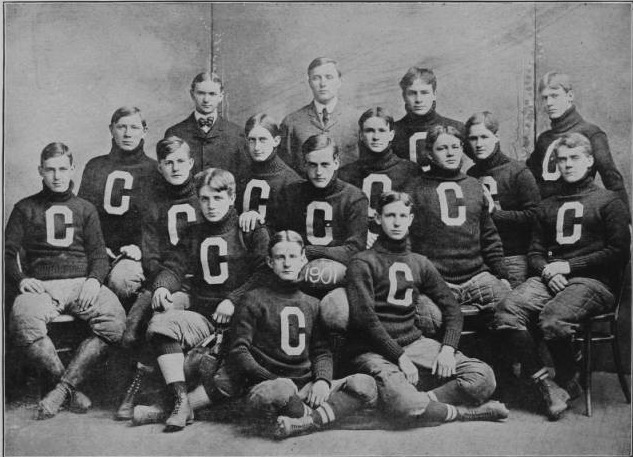
    <summary type="html"><![CDATA[<p><strong><em>Heeding President Herbert Hoover's call for holding a charity football game in every American city as a collective voluntary response to dwindling relief money in the depths of the Great Depression, in 1931, Cleveland initiated an annual showcase of high school student talents that filled Municipal Stadium each Thanksgiving weekend for more than three decades. </em></strong></p><img src="https://temp.clevelandhistorical.clevelandhistorical.reclaim.hosting/files/fullsize/600442c80880b3d3779a8ea486530533.jpg" alt="Cleveland Central High School Football Team, 1901" /><br/><p>The rich tradition of scholastic football in the Cleveland area dates back to the beginnings of American football in the United States. At the collegiate level, the game first emerged among East Coast schools as a variation of the English Rugby Code in the mid 1800s. Nearly three decades of organized contests saw leaders of the sport revise rules and tactics to improve the game for its participants. In 1890, the Cleveland Plain Dealer printed an article explaining the game and introducing its readers to the state of the game in the area. Case Institute of Applied Science and Adelbert College (Western Reserve University) had been playing "the Rugby Game." In 1890, the Cleveland School Athletic Association was formed to include both college freshman teams with a team from Cleveland Central High School on East 55th Street (its first public high school) and a new private school called the University School located on Giddings Avenue between Lexington and Hough Avenues. And so, a four-team league initiated the region's high school football scene in the fall of 1890. The next 40 years were marked by many challenges, the near extinction of the game, reform and massive growth and popularity building westward across the county. </p><p>Meanwhile, the Cleveland scholastic scene mirrored the trends. As the city population grew with its schools, more teams took to the fields and the school leaders organized a senate athletic league to govern the game and its contests. Each year the league would determine a city champion based upon regular season records of competing league schools. The field of local teams expanded to include teams from beyond the city and school district boundaries during the 1900s through the late 1920s.  Shaw, Lakewood, Cleveland Heights, and private schools Saint Ignatius, Cathedral Latin, and others were considered for the competition for a city championship. Furthermore, fan interest was large enough to promote local, regional, and state level contests to determine scholastic football superiority. </p><p>Economic collapse interrupted a large part of America's lifestyle in 1929 when income and resources declined dramatically. In 1930 government leaders at all levels sought ways to raise funds for relief of the unemployed by organizing postseason collegiate football contests. An aide to President Herbert Hoover suggested a charity football game in every city, with proceeds supporting local relief efforts. Cleveland "took the ball and ran" with a plan to organize a city championship game for charity. Coincidentally, the city was completing construction of a new lakefront stadium in July 1931 with a seating capacity over 78,000 spectators. Cleveland’s stadium commissioner approved the site for the Charity Game for rent of one dollar, ushering in the beginning of an era. Game opponents were selected after the regular high school season ended in November 1931: Cleveland Senate leader Central High would face Catholic League leader Cathedral Latin in front of 19,304 fans on ‘Thanksgiving Saturday.’ The game raised $8,200 for Plain Dealer Charities’ Give-a-Christmas food basket program. Latin prevailed 18-0 to become the city’s first Charity Game Champion. Thus began a very popular run of high school football games to determine Cleveland’s champion annually on Thanksgiving weekend for the next 37 years at Cleveland Municipal Stadium. </p><p>Some team and league alignments were modified as Cleveland and its surroundings continued to grow. In 1936, the Cleveland Senate Athletic League was reorganized to include schools within the city limits with four Catholic high schools and 13 Cleveland public high schools in the East and West Senate divisions. The annual champs of both Senate divisions would face each other in the Thanksgiving weekend Charity game. The annual event was marked with a student poster contest, marching band competition from many area schools, and majorette and drum major competitions. The annual game grew in popularity and by 1937 drew 47,000 spectators with larger crowds arriving in the 1940s. In 1946 Cathedral Latin played Holy Name in front of 70,955 fans as envious professional teams took note. By 1953, proceeds to Plain Dealer charities exceeded $400,000 and continued to support the Give-a-Christmas fund and the Senate’s athletic insurance fund. From 1955 to 1968, the game was played on Thanksgiving Day with all the annual traditions and ceremony. Game attendance remained strong, between 20,000 and 40,000 spectators through the mid 1960s. </p><p>Meanwhile, on the football field, Cleveland’s high school teams battled annually to be crowned city champs. Benedictine (14), Cathedral Latin (13), and St. Ignatius (13) posted the most appearances; Rhodes, Lincoln, Holy Name, Collinwood, and South High also made multiple appearances at the Stadium with numerous area bands and talent squads. </p><p>The demise of the game at the Stadium began in the 1960s with game day disturbances in the downtown area in 1962 and 1963. The 1968 contest posted one of the lowest attendances in history of the game and was marred by disruptions at the game and afterwards in the downtown area. Fights at the stadium left one injured policeman among others; vandals smashed windows in downtown storefronts and several fights, assaults, and robberies were reported, causing one councilman to threaten to cancel future games. These troubles combined with the changing trends in high school football—more competitive leagues outside the cities and restructuring of a statewide system of ranking teams for a larger post season tournament—to diminish the appeal of a city championship game of the Charity Game magnitude in the future decades. The game was relocated to local high school fields and the Plain Dealer withdrew its sponsorship. Though a Senate League championship continues to be played, the final game for charity was held in 1987 at John Marshall Field.</p><p><em><strong><a href="https://temp.clevelandhistorical.clevelandhistorical.reclaim.hosting/items/show/783">For more (including 8 images&#32;&amp;&#32;3 audio files) view the original article</a></strong></em></p>]]></summary>
    <published>2017-02-07T16:49:30+00:00</published>
    <updated>2026-04-17T19:17:41+00:00</updated>
    <link rel="alternate" type="text/html" href="https://temp.clevelandhistorical.clevelandhistorical.reclaim.hosting/items/show/783"/>
    <id>https://temp.clevelandhistorical.clevelandhistorical.reclaim.hosting/items/show/783</id>
    <author>
      <name>Jim Lanese</name>
    </author>
  </entry>
  <entry>
    <title type="html"><![CDATA[The Cleveland Rams: The City&#039;s Pre-Browns NFL Champions]]></title>
    <summary type="html"><![CDATA[<img src="https://temp.clevelandhistorical.clevelandhistorical.reclaim.hosting/files/fullsize/9dfd55eb3c4813ebd7be134da3f0fd60.jpg" alt="&quot;Buzz&quot; Wetzel and Rams Players, 1936" /><br/><p>From 1937 to 1945, Cleveland Municipal Stadium—now the site of FirstEnergy Stadium—was home to the Cleveland Rams for 20 of their 35 National Football League home games in Cleveland, including their triumph in the 1945 NFL championship game as the first Cleveland team since the 1924 Bulldogs to win a pro football title. The stadium was also at the center of the Rams’ collision with the incoming Cleveland Browns, factoring in the Rams franchise's historic decision to depart for Los Angeles in January 1946. The move was not unlike the departure of Art Modell's Browns to Baltimore 50 years later, with Rams owner Daniel F. Reeves denying persistent rumors that the team might relocate before finally citing financial difficulties and a better stadium as his reasons for moving the team to another city. </p><p>Lawyer/businessman Homer H. Marshman and former Ohio State and NFL player Damon “Buzz” Wetzel, using seed money from a host of Cleveland investors, founded the Rams in 1936 in the American Football League, with the team playing all of their home games at League Park. But when the Rams fell just short of a championship in the financially shaky AFL, Marshman and Wetzel moved the franchise the following season to the far more established NFL. From 1937 through 1942, the Rams suffered six non-winning seasons under three head coaches as they rotated home games among Municipal Stadium, League Park, and Shaw Stadium. </p><p>In 1941 the Cleveland-based owners, fearful they might lose their investments if World War II were to shut down the NFL, sold the franchise to Reeves, a New York City grocery magnate, who immediately considered and then withdrew—in the face of civic opposition and the disapproval of the other NFL owners—a proposal to move the Rams to Boston. At one point Cleveland businessman Arthur “Mickey” McBride offered to buy the team from Reeves, who rejected the offer, causing McBride to found a Cleveland franchise in the emerging All-America Football Conference (AAFC) that later was to be named the Browns. Had McBride succeeded in buying the Rams, it is very possible the team might never have left Cleveland and that the Browns might never have entered the NFL. </p><p>In 1943, Reeves and general manager Charles “Chile” Walsh, with a war-shortened roster, and after watching attendance for Cleveland Indians baseball games plummet the previous summer, became the only NFL team to elect to suspend operations because of World War II, and sent multiple players to other teams in a dispersal draft. In 1944 Reeves and Walsh, quickly recognizing their mistake, returned the Rams to NFL play and selected quarterback Bob Waterfield of UCLA in the player draft. </p><p>In 1945 the Rams—featuring stars including Waterfield, end Jim Benton, lineman Riley “Rattlesnake” Matheson, and four other players who would jump to the Cleveland Browns the following year—surged to the Western Division title and their first-ever winning season at 9–1. The resulting championship game at Municipal Stadium on December 16, 1945 was among the more unusual in NFL history. With wintry weather in the forecast, Stadium groundskeepers covered the field with straw and laid down a tarp, which subsequently was covered with heavy snow as the week before the game wore on. On game day, as temperatures hovered near zero and snow piles and stacks of straw ringed the field and the Stadium floor’s perimeter, the Rams capitalized on two Waterfield touchdown passes and a freak safety by Washington Redskins quarterback Sammy Baugh to win the game and the NFL championship, 15–14. </p><p>After the game, Reeves jubilantly suggested he might expand the capacity of 23,000-seat League Park by 10,000 to create a more suitable home for his new champions. But with the Browns of the new AAFC planning to begin play in autumn 1946 at 78,000-seat Municipal Stadium, which McBride had offered to share with the Rams, Reeves instead announced on January 12, 1946—amid a citywide newspaper strike in Cleveland that lasted a month—that he would transfer the franchise 2,400 miles west to Los Angeles and its 103,000-seat Memorial Coliseum. Reeves’s fellow NFL owners initially opposed the move, arguing that the Rams would be situated an impractical 2,000-mile, 45-hour train ride from the next-closest teams in Chicago and Green Bay, Wisconsin; but Reeves countered that the move was necessary for the NFL to gain a foothold in California, where the rival AAFC’s San Francisco 49ers and Los Angeles Dons just were taking up residence. </p><p>Browns officials, advancing quickly to gain public favor now that they were assured of sole access to the Cleveland pro football market, positioned their new AAFC team as a way to forget the Rams. And indeed the Browns, after joining the NFL in 1950 following the disintegration of the AAFC, faced the Rams for the league championship three times in the six seasons from 1950 through 1955, with the Browns taking two. The Rams and the Browns paced pro football in attendance for years, yet their respective host cities were beginning to move in opposite directions. With Los Angeles the fifth-largest city in America at the time of the move and Cleveland just behind it as sixth largest, Los Angeles and the Sun Belt grew rapidly while Cleveland and the so-called Rust Belt continued to decline in population. </p><p>The Rams, in becoming the first major-league sports franchise west of the Mississippi, set off a westward migration of sports franchises that later included baseball’s Giants and Dodgers. The team also racially reintegrated the NFL in 1946 when it was forced to sign African American players Kenny Washington and Woody Strode as a condition for renting the publicly owned Los Angeles Coliseum. The Rams franchise was in some ways the “proto-Browns” for NFL football in Cleveland, and Reeves’s decision to relocate the team to L.A. was a falling domino whose implications continue to this day.</p><p><h3>About the Author</h3>
James C. Sulecki is a Cleveland-area author of the book <i>The Cleveland Rams: The NFL Champs Who Left Too Soon, 1936–1945</i> (McFarland, 2016). He is winner of the Professional Football Researchers Association’s 2016 Nelson Ross Award for “outstanding achievement in pro football research and historiography.” Learn more at <a href="http://www.CleRams.com">www.CleRams.com</a>.</p><p><em><strong><a href="https://temp.clevelandhistorical.clevelandhistorical.reclaim.hosting/items/show/781">For more (including 12 images) view the original article</a></strong></em></p>]]></summary>
    <published>2017-02-06T10:10:03+00:00</published>
    <updated>2026-04-17T19:17:41+00:00</updated>
    <link rel="alternate" type="text/html" href="https://temp.clevelandhistorical.clevelandhistorical.reclaim.hosting/items/show/781"/>
    <id>https://temp.clevelandhistorical.clevelandhistorical.reclaim.hosting/items/show/781</id>
    <author>
      <name>James C. Sulecki</name>
    </author>
  </entry>
  <entry>
    <title type="html"><![CDATA[John W. Heisman: Ohio City&#039;s Gridiron Pioneer]]></title>
    <summary type="html"><![CDATA[<img src="https://temp.clevelandhistorical.clevelandhistorical.reclaim.hosting/files/fullsize/a338578bcc7eb5869563379cd9290ea8.jpg" alt="Striking A Pose" /><br/><p>On October 23, 1869, one of football's most iconic figures was born in Ohio City. Today he is best known as the namesake of the most prestigious award in college football, the Heisman Memorial Trophy. The trophy is awarded annually to the nation's most outstanding college football player.  While Heisman was a decorated college football player at the University of Pennsylvania, his true legacy lies in the progressive contributions he made to the sport of football during his coaching days. Heisman's did not merely improve the game of football and make it more exciting, he ensured its survival.</p><p>Although born in the Cleveland neighborhood of Ohio City, Heisman grew up in western Pennsylvania. He played college football at Brown University before transferring to the University of Pennsylvania, where he played football until he received a law degree. In 1892, he began his coaching career at Oberlin College, leading the team to a perfect season with victories over storied programs such as Michigan and Ohio State, which he beat twice. He went on to coach at Buchtel College (later the University of Akron), Auburn, Georgia Tech, Pennsylvania, Washington, and Rice for a combined 36 years.</p><p>During his coaching career, Heisman revolutionized the sport of football. While coaching at Buchtel, Heisman conceived the center snap and the snap count. The center used to roll the ball on the ground to the quarterback to start an offensive play. However, Buchtel's quarterback at the time was too tall, and took too long to pick the ball up off the ground.  The combination of snapping the ball, and the snap count granted the offense more time against the rush of defenders. </p><p>Heisman is also credited as the "Father of the Forward Pass" because he was the first coach to use it in a game. During his time, football was much more dangerous because of the pounding that a player would endure while carrying the ball.  Many casualties and crippling injuries occurred from players swarming around the runner with brute physicality. The forward pass spread players out to utilize more of the football field, adding a significant amount of finesse to the physical game. Heisman's timing could not have been better. At the turn of the 20th century, many schools began to disband their teams for safety reasons, but Heisman's developments curbed the sport's decline and revived it. </p><p><em><strong><a href="https://temp.clevelandhistorical.clevelandhistorical.reclaim.hosting/items/show/548">For more (including 8 images) view the original article</a></strong></em></p>]]></summary>
    <published>2012-09-06T11:04:56+00:00</published>
    <updated>2026-04-17T19:17:39+00:00</updated>
    <link rel="alternate" type="text/html" href="https://temp.clevelandhistorical.clevelandhistorical.reclaim.hosting/items/show/548"/>
    <id>https://temp.clevelandhistorical.clevelandhistorical.reclaim.hosting/items/show/548</id>
    <author>
      <name>Matthew Sisson</name>
    </author>
  </entry>
  <entry>
    <title type="html"><![CDATA[Luna Park: A Sliver of Coney Island in Cleveland]]></title>
    <summary type="html"><![CDATA[<img src="https://temp.clevelandhistorical.clevelandhistorical.reclaim.hosting/files/fullsize/c49be72c903728f083659ce8836e5bc0.jpg" alt="Entrance to Cleveland&#039;s Luna Park" /><br/><p>Luna Park opened in 1905 as the second in an international chain of amusement parks (all known as Luna Park) opened by Frederick Ingersoll, owner of the Ingersoll Construction Company. Ingersoll's company got its start building vending machines, roller coasters, and other amusement park rides. By 1901, however, the company had started building entire amusement parks as well. The two first Luna Parks opened in Cleveland and Pittsburgh in 1905. At its peak, Ingersoll's company ran over 40 amusement parks across the country and in such exotic locales as Mexico City and Berlin, Germany. </p><p>Luna Park was Euclid Beach Park's most significant competition throughout the early part of the 1900s. Unlike Euclid Beach Park, however, Luna Park charged admission at its gates and sold alcohol to its guests.  Portions of the park were copied from the Luna Park (unaffiliated with Ingersoll's parks of the same name) in New York City's Coney Island.  The park covered 35 acres of hilly ground in Cleveland's Woodland Hills neighborhood. In order to reach the entrance gates of Luna Park, patrons had to climb a steep flight of stairs. Later, an escalator was installed. Once inside, the park had a number of popular attractions, including a carousel, a ferris wheel, roller coasters, a funhouse, a dance hall, and a roller skating rink. The Luna Bowl, a 20,000 seat stadium on the park's grounds, played host to a number of sporting events and was home to two of Cleveland's earliest professional football teams in the 1920s: the Cleveland Bulldogs and the Cleveland Panthers.  </p><p>Luna Park lost much of its popularity in the 1920s. Alcohol Prohibition during this time seriously hurt the beer-serving park (Euclid Beach was alcohol free throughout its history). The Great Depression led to a further decline in attendance, and most of the park was demolished in 1931. </p><p>By 1940, Luna Park had been replaced by the Woodhill Homes housing project. </p><p><em><strong><a href="https://temp.clevelandhistorical.clevelandhistorical.reclaim.hosting/items/show/259">For more (including 9 images) view the original article</a></strong></em></p>]]></summary>
    <published>2011-07-17T14:50:38+00:00</published>
    <updated>2026-04-17T19:17:38+00:00</updated>
    <link rel="alternate" type="text/html" href="https://temp.clevelandhistorical.clevelandhistorical.reclaim.hosting/items/show/259"/>
    <id>https://temp.clevelandhistorical.clevelandhistorical.reclaim.hosting/items/show/259</id>
    <author>
      <name>CSU Center for Public History and Digital Humanities</name>
    </author>
  </entry>
  <entry>
    <title type="html"><![CDATA[Municipal Stadium]]></title>
    <summary type="html"><![CDATA[<img src="https://temp.clevelandhistorical.clevelandhistorical.reclaim.hosting/files/fullsize/stadium-cmp-paigewithveeck48_2ab6e3a5ae.jpg" alt="Satchel Paige and Bill Veeck, 1948" /><br/><p>The demolition of Cleveland Municipal Stadium officially began in November 1996 and was complete by the following spring. In the fall of 1995, Cleveland Browns owner Art Modell decided to move the city's football team to Baltimore. Angry fans began the demolition process themselves during the Browns' final home game in 1995, tearing out seats and taking other pieces of Municipal Stadium with them as souvenirs, knowing it might be their last time in the stadium. Part of Mayor Michael White's deal with the National Football League to bring an expansion team to the city included the building of a new stadium. The old stadium would be torn down to make way for a new lakefront facility. Coincidentally, Cleveland's Osborn Engineering Company, which, along with architectural firm Walker and Weeks, had been the main designer of Municipal Stadium, oversaw the demolition of the stadium that it had so proudly helped build more than 65 years earlier.</p><p>The construction of Cleveland Municipal Stadium was completed in 1931. It had a seating capacity of slightly more than 78,000, which gave the stadium the largest outdoor seating capacity of any stadium in the world.  In 1928, Cleveland voters approved a $2.5 million bond to help pay for its construction, one of the first instances in which the public helped finance a sports stadium.  The final cost of construction came in at around $3 million.  On July 3, 1931, the first event at the stadium was held when heavyweight boxing champion Max Schmeling defeated Young Stribling.  This also marked the first time that a heavyweight boxing bout had taken place in Cleveland.</p><p>The Cleveland Indians played their first game at the stadium on July 31, 1932, and played all of the 1933 season there, as well.  Until 1947, however, the team played its weekday games at the smaller League Park, opting to play at Municipal Stadium only during weekends and holidays when a larger crowd could be assured.  In 1948 and 1954 the stadium hosted Major League Baseball's World Series.  </p><p>The Cleveland Browns began playing at Municipal Stadium in 1946 when they were a part of the All-American Football Conference (AAFC) -- a short-lived rival to the NFL. The Browns won all four of the AAFC's title games, three of which ('46, '48, '49) were held in  Municipal Stadium.  The Browns also had a perfect regular season (14-0) in 1948 and won the AAFC championship at the stadium that year by defeating the Buffalo Bills, 49-7. </p><p>After moving to the NFL in 1950, the team continued their success.  The Browns played host to the NFL Championship Game (the precursor to the Super Bowl) in 1950, 1952, 1954, 1964, and 1968,  winning each time except for the last. Today, the new Cleveland Browns Stadium (opened in 1999) sits on the site of Municipal Stadium.</p><p><em><strong><a href="https://temp.clevelandhistorical.clevelandhistorical.reclaim.hosting/items/show/149">For more (including 8 images, 2 audio files,&#32;&amp;&#32;1 video) view the original article</a></strong></em></p>]]></summary>
    <published>2011-02-28T10:35:22+00:00</published>
    <updated>2026-04-17T19:17:37+00:00</updated>
    <link rel="alternate" type="text/html" href="https://temp.clevelandhistorical.clevelandhistorical.reclaim.hosting/items/show/149"/>
    <id>https://temp.clevelandhistorical.clevelandhistorical.reclaim.hosting/items/show/149</id>
    <author>
      <name>Michael Rotman</name>
    </author>
  </entry>
  <entry>
    <title type="html"><![CDATA[League Park: A &quot;Neighborhood&quot; Home for Cleveland Sports ]]></title>
    <summary type="html"><![CDATA[<img src="https://temp.clevelandhistorical.clevelandhistorical.reclaim.hosting/files/fullsize/lg_boy-sneaking-a-peek_db121825b5.jpg" alt="Sneaking a Peek " /><br/><p>The construction of the massive, 70,000-seat Cleveland Municipal Stadium in the 1930s spelled the beginning of the end for a much older stadium— League Park. This ballpark was constructed in 1891 east of downtown in Cleveland's Hough neighborhood at Dunham Street (East 66th) between Linwood and Lexington Avenues. Lexington Avenue trolley-line operator Frank Robison shoehorned the ballpark into the residential neighborhood, conveniently generating revenues from fares and game tickets. Its tight quarters and restrictive right-field fence to fit the property gave rise to “pinball” baseball, leaving outfielders never knowing where the ball would ricochet. Close-by homes featured signs advertising local businesses for home-run promotions. Despite renovations in 1910 that replaced the original wood with concrete and steel, expanding capacity to over 20,000, League Park was deemed to be too small and antiquated for professional baseball after Municipal Stadium opened. </p><p>League Park began its run as the home of the Cleveland Spiders who became the Indians in what was the site of the 1920 World Series, in which the Indians beat the Brooklyn Dodgers for their first championship. From 1916 to 1927, as a perquisite of owning the team, Jim Dunn changed the name to Dunn Field, but thereafter the name reverted to League Park. Negro League baseball teams also thrived at League Park from the mid-1930s, culminating with the <a href="https://clevelandhistorical.org/items/show/867">Cleveland Buckeyes</a> winning the the Negro American League World Series in 1945. The Indians played their last game at League Park in 1946, but for ten years prior to that they had been playing weekend and holiday games at the bigger stadium on the lakefront. During its heyday, the Park hosted MLB’s best—manager Tris Speaker, hitter Ty Cobb, slugger Babe Ruth, Lou Gehrig, infamous shoeless Joe Jackson, shortstop Ray Chapman, and champion Bob Feller, among others. Joe DiMaggio finalized his 56-game hitting streak at the Park in 1941; the streak ended the next day at Muny Stadium. The Indians initially achieved success after departing League Park, but the team's fortunes soon declined. The last thirty years or so of the Indians' tenure at Municipal Stadium were marked by losing seasons and tens of thousands of empty seats until their move to Jacobs Field in the mid-1990s and re-emergence of winning ways.</p><p>Though usually remembered for baseball, League Park also hosted a wider variety of sporting events. In the second and third decades of the 20th century, boxing drew crowds in the mild weather months to see Clevelander <a href="https://clevelandhistorical.org/items/show/288">Johnny Kilbane</a> defend his titles at the Park. Local high school football first appeared at the Park in 1896 when Central High met University School in a championship contest. More games were hosted over the years, including several Thanksgiving Day games between Cathedral Latin and St. Ignatius. College football also came calling to the facility between 1920 and 1949. The Big Four League of Western Reserve, Case Tech, John Carroll, and Baldwin Wallace used League Park regularly, hosting visiting teams from Ohio State, Ohio U., and others. The 1945 NFL champion <a href="https://clevelandhistorical.org/items/show/781">Cleveland Rams</a>, the last of a series of Cleveland professional football teams predating the Browns, also called League Park home between 1916 and 1950. Much of the stadium was demolished in 1952, when the site became a public park. However, a few remnants, including the baseball diamond itself, still stand today. </p><p>In 2002 the last of the grandstand structure was demolished. Cleveland city councilwoman Fannie Lewis mobilized local interest in capturing and preserving memories of the glory days of the stadium, and in revitalizing the surrounding neighborhood. Osborn Engineering, the firm that managed the 1910 refurbishment, provided design work for a renewed League Park recreation area. The Baseball Heritage Museum has been located at League Park since 2014. The Museum is dedicated to preserving the artifacts and stories of baseball’s past with a special focus on diversity in the sport; the stories of challenge and triumph intrinsic in the stories of the Negro Leagues and other underserved demographics in the sport. “General programming, youth educational offerings, community outreach and other initiatives are driven by the rich repository of life lessons in these stories. The Museum is also a driver of Cleveland’s sense of place, by continuously working to become a center of neighborhood life and a destination location for baseball and history lovers from across the city and across the country.”</p><p><em><strong><a href="https://temp.clevelandhistorical.clevelandhistorical.reclaim.hosting/items/show/16">For more (including 13 images, 3 audio files,&#32;&amp;&#32;1 video) view the original article</a></strong></em></p>]]></summary>
    <published>2010-09-14T20:50:40+00:00</published>
    <updated>2026-04-17T19:17:36+00:00</updated>
    <link rel="alternate" type="text/html" href="https://temp.clevelandhistorical.clevelandhistorical.reclaim.hosting/items/show/16"/>
    <id>https://temp.clevelandhistorical.clevelandhistorical.reclaim.hosting/items/show/16</id>
    <author>
      <name>Michael Rotman&amp;#32;&amp;amp;&amp;#32;Jim Lanese</name>
    </author>
  </entry>
</feed>